From assessment best-practice to the power of certifications, our blog has a range of topics built with you in mind
Welcome to the Resource Center
Build world-class learning and certification programs with the help of our reports, webinars, and insights
Explore our resources
Webinars
From best-practice training to deep-diving into assessment themes, our webinars are a chance to deepen your understanding, and learn some helpful tips along the way.
Podcasts
Unlocking the Potential of Assessments features insights from thought leaders from the world of online assessments.
Reports
Read the latest assessment research and sector-based insights in our industry reports
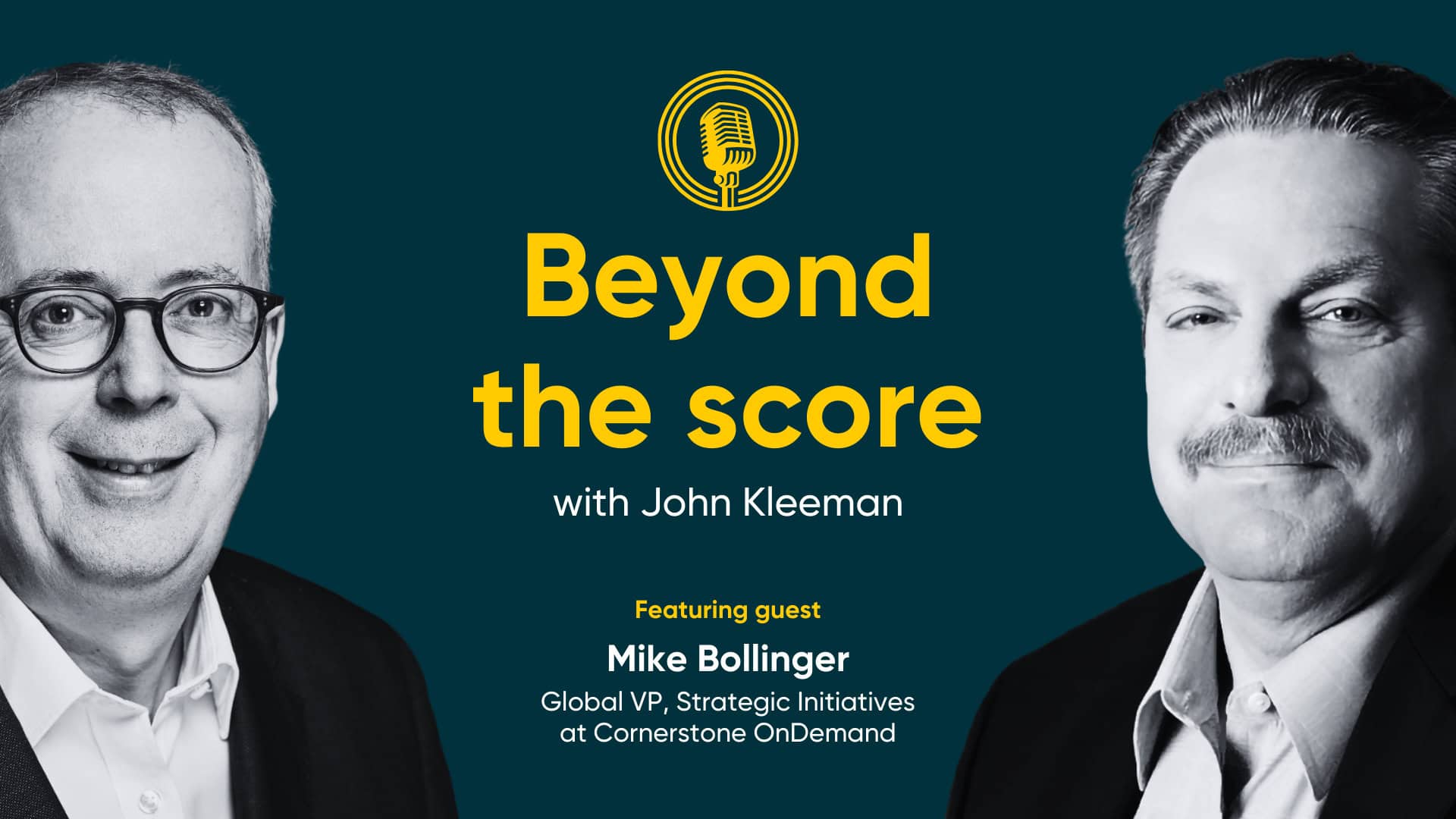
Featured Podcast
Proving skills in a world reshaped by AI
Mike Bollinger of Cornerstone OnDemand joins us to explore how assessment, skills, and AI are converging to redefine workforce readiness.
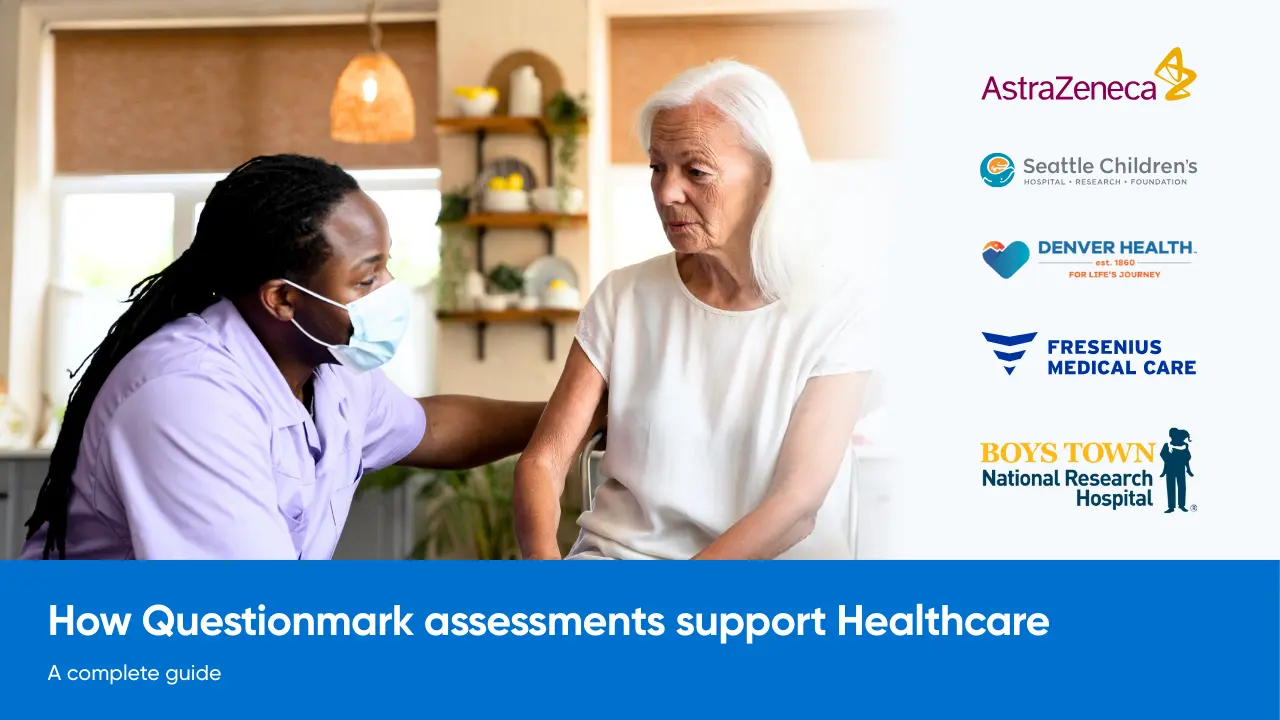
Featured Report
How Questionmark assessments support Healthcare: A complete guide
Assessments that reduce risk, prove compliance, and close skill gaps.
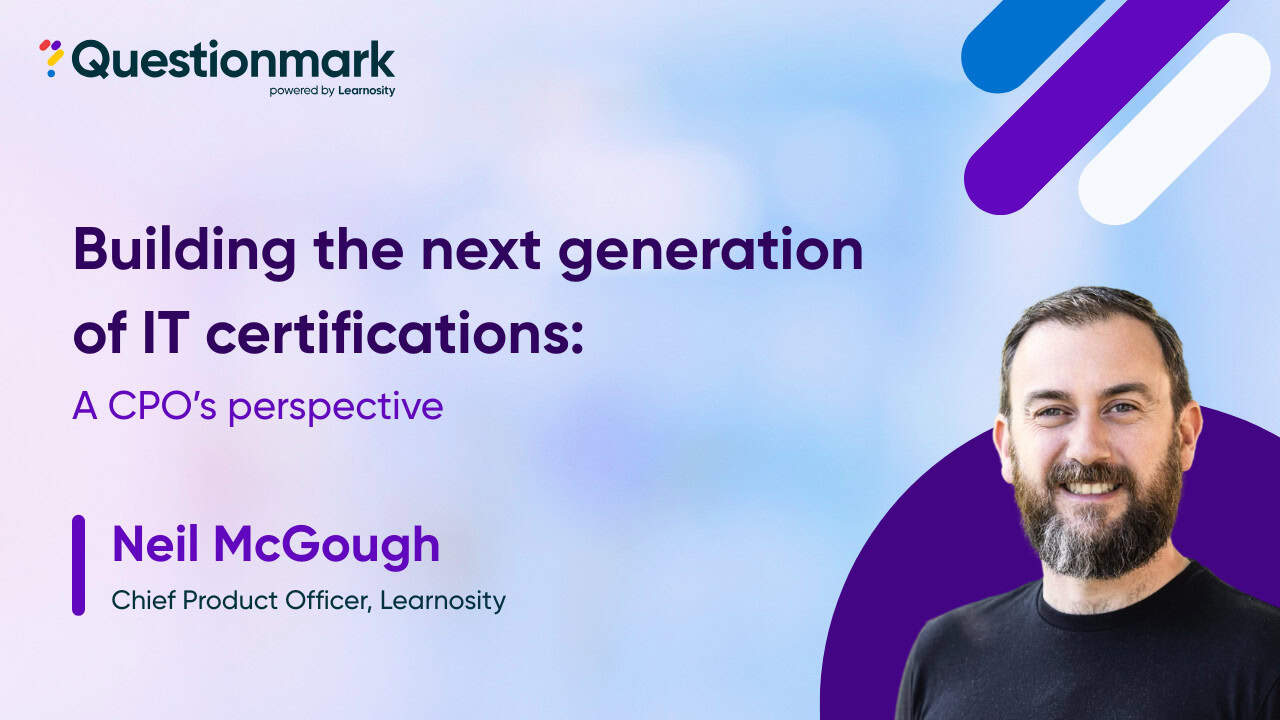
Featured Blog
Building the next generation of IT certifications: A CPO’s perspective
Discover insights on how to build a successful IT certification program in a world of skill gaps, AI, & challenges with scaling practical tests.
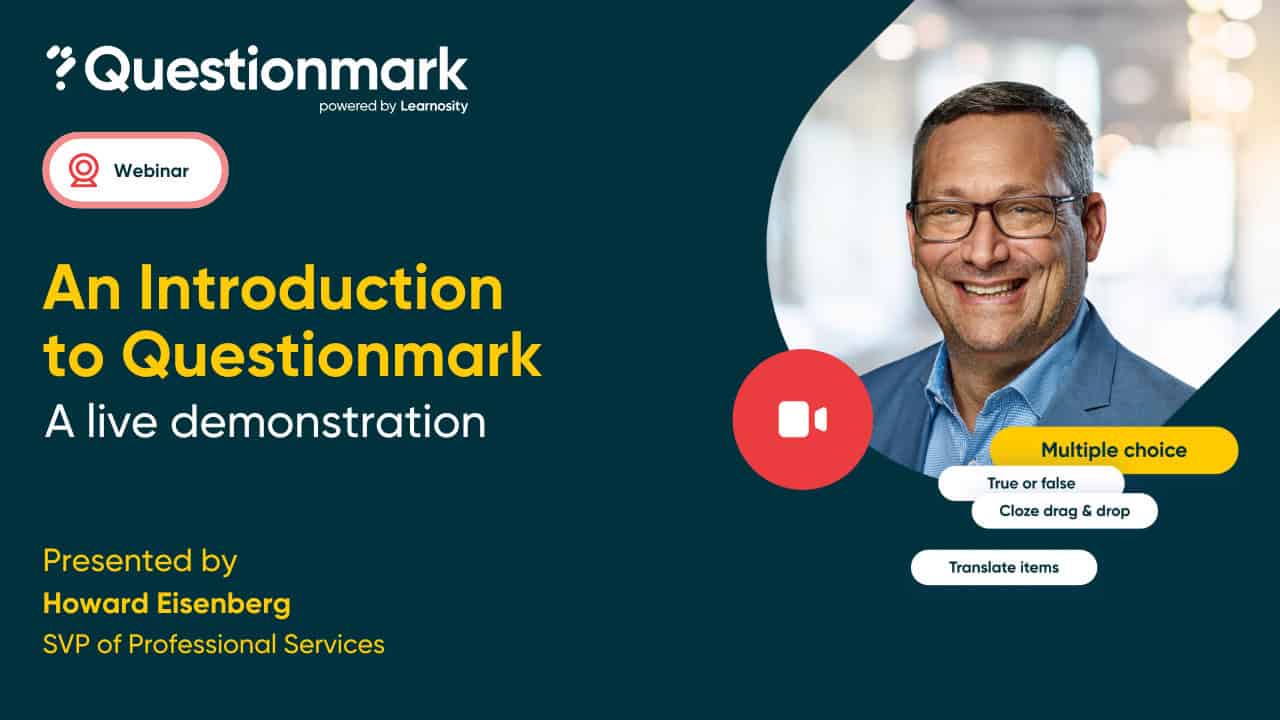
Featured Webinar recording
An Introduction to Questionmark: A live demonstration
Learn the basics of authoring, delivering and reporting on surveys, quizzes, tests and exams using Questionmark’s assessment platform.